Almond Flour Cups to Grams: Conversions for Low-Carb and Keto Baking
One cup of almond flour weighs about 96 grams — except when it doesn't. Pull two different bags off the shelf and the same measuring cup can hold anywhere from 96 to 112 grams, a 16-gram swing that's big enough to turn a tender keto cake into a greasy brick. The converter above sorts it out for every grind and even runs the net-carb math. This guide explains where 96 grams comes from, why your bag's label disagrees with most recipe charts, and how to swap almond flour into a recipe without wrecking it.
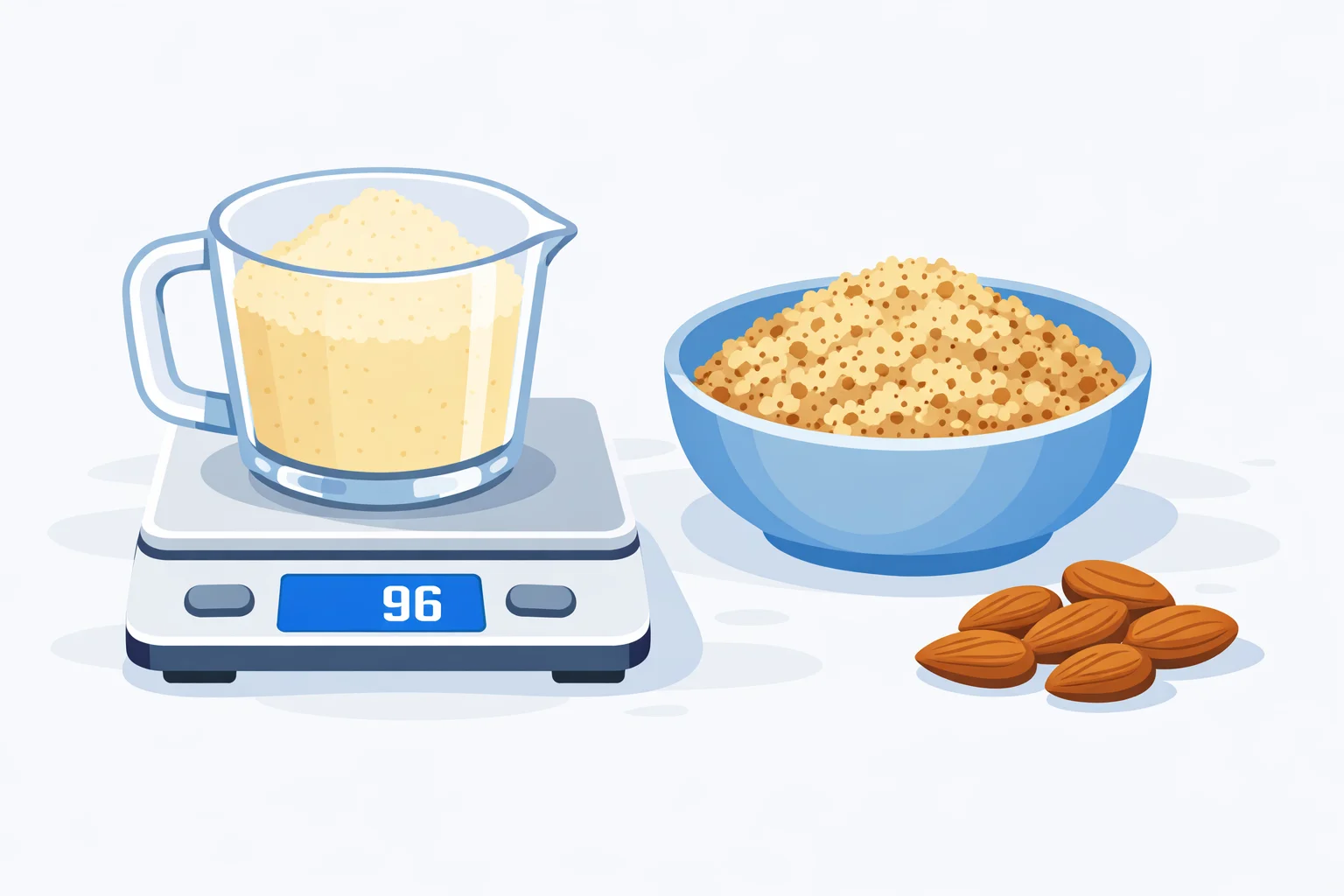
Why Your Bag Says 28g and the Recipe Says 24g
Flip over a bag of Bob's Red Mill almond flour and the nutrition panel reads "¼ cup (28g)." Multiply that out and a full cup is 112 grams. But the King Arthur Baking weight chart lists almond flour at 96 grams per cup, or 24 grams a quarter cup. Neither is wrong. The difference is grind. Super-fine flours are milled to a near-powder that settles tight, so more fits in the same volume. Coarser, spooned flour traps air and weighs less.
This matters because almond flour costs three to four times what wheat flour does. Measuring by an unmarked cup means you might be using 16 extra grams per cup — in a recipe with three cups of flour, that's nearly 50 grams of pricey almond flour either wasted or missing. When a bag prints a gram weight per serving, trust it over any generic chart, because it reflects that specific brand's grind.
Almond Flour vs Almond Meal: The 4-Gram Difference
People use the terms interchangeably, but they're not the same product. Almond flour is made from blanched almonds — skins removed — ground to a fine, pale powder. Almond meal leaves the skins on and is ground coarser, giving it brown flecks, a grittier feel, and a slightly higher weight of about 100 grams per cup versus 96 for flour. Those bigger particles and bits of skin pack a little denser in the cup.
The texture gap matters more than the four grams. Use fine almond flour when structure and a smooth crumb count: macarons, layer cakes, financiers. Almond meal's coarseness is a feature in rustic bakes — pie crusts, crumble toppings, and breading for chicken or fish, where you actually want some bite. Swap meal into a macaron recipe and the shells come out bumpy and prone to cracking. For the broader picture of how different ground ingredients weigh up, our all-ingredient cups to grams chart lines them up side by side.
Almond Flour by Spoon, Quarter-Cup, and Cup
These are the blanched-flour figures to keep handy, anchored to 96 grams per cup with 16 tablespoons to the cup. Round to the nearest gram on a kitchen scale and you'll be well within recipe tolerance.
| Amount | Grams (blanched) | Handy equivalent |
|---|---|---|
| 1 tablespoon | 6 g | ≈ 0.2 oz |
| ¼ cup | 24 g | super-fine serving = 28 g |
| ⅓ cup | 32 g | ≈ 1.1 oz |
| ½ cup | 48 g | ≈ 1.7 oz |
| 1 cup | 96 g | 3.4 oz · meal = 100 g |
| 2 cups | 192 g | ≈ 6.8 oz |
| 3 cups | 288 g | ≈ 10.2 oz |
Notice the quarter-cup row: 24 grams by the King Arthur standard, but 28 if you're using a super-fine bag. That single gap is the most common source of almond-flour confusion online.
Why You Can't Swap It for Wheat Flour Cup-for-Cup
Here's the trap that ruins first attempts at low-carb baking: treating almond flour as a one-to-one stand-in for all-purpose. A cup of all-purpose flour weighs about 120 grams, while a cup of almond flour is only 96 — so even by volume you're already 24 grams short on dry matter. Then there's chemistry. Wheat flour has gluten that builds an elastic web to trap gas; almond flour has none. It's also roughly half fat by weight, so it can't absorb liquid the way wheat does.
The practical fix: replace by weight, not volume, then add a binder and cut the liquid. Most almond-flour recipes lean on extra eggs or a teaspoon of psyllium husk to hold the crumb together, and they bake at a slightly lower temperature because almond flour browns fast from its oil. If you're adapting a wheat recipe rather than following a tested almond one, expect to tinker. Want to compare the wheat numbers directly? Our cups to grams flour converter covers all-purpose, bread, and cake flour weights.
What a Cup Costs You in Net Carbs
This is the whole reason almond flour earns a spot in a keto pantry. A 96-gram cup carries about 21 grams of total carbohydrate, but roughly 10 grams of that is fiber, leaving around 11 grams of net carbs. The same cup delivers about 48 grams of fat and 20 grams of protein, which is why almond-flour bakes feel rich and filling. The macro panel in the tool above runs these figures for any amount you enter.
The contrast is stark. A cup of all-purpose flour packs roughly 70 grams of net carbs — more than six times almond flour's 11. Build a keto bread with three cups of almond flour and you're looking at about 33 net carbs across the whole loaf, against more than 200 for a wheat version. Per slice, that's the difference between staying in ketosis and blowing a daily carb budget on one sandwich. These macros come from USDA FoodData Central almond entries and vary a little by brand, so treat them as close estimates.
Worked Example: Converting a Macaron Recipe
French macarons are the strictest test, because the shell is mostly almond flour and ground sugar — get the ratio wrong and they crack. Say a recipe calls for 1¾ cups of blanched almond flour. Here's the conversion done right:
- What you need: 1.75 cups × 96 g = 168 grams.
- If your bag is super-fine: 1.75 × 112 g = 196 grams — 28 grams more for the identical cups.
- The fix: weigh out exactly 168 g regardless of brand, then sift it with the powdered sugar.
That 28-gram spread is the difference between a smooth, footed shell and a dense, oily one. Macaron bakers weigh everything to the gram for exactly this reason. The same logic applies when you scale a batch up for a party — run it through our recipe scaler so the almond-to-sugar ratio holds at any size.
Where Almond Flour Measuring Goes Wrong
Three mistakes account for most almond-flour failures. First, packing the cup: almond flour clumps from its natural oil, and pressing those lumps in can add 10 to 15 grams, pushing a 96-gram cup past 110. Always spoon and level, or better, weigh. Second, confusing flour with meal — sub coarse 100-gram meal into a recipe written for fine 96-gram flour and delicate bakes turn gritty. Third, ignoring the brand's own gram weight in favor of a generic chart, which can leave you 16 grams off per cup. Weigh when texture matters, check the label, and keep a low-carb companion like our cups to grams oats reference nearby for the rest of the recipe.