Cups of Flour to Grams: Why Your Measuring Method Changes the Number
Converting cups of flour to grams has one right answer and one trap: 1 cup of all-purpose flour is 125 grams — but only if you spooned it in and leveled it off. Dip the same cup into the bag and you'll scoop up 160g without noticing. That 35-gram gap is about three extra tablespoons of flour, and it's the reason a cookie recipe that worked for your friend turns out dry and crumbly for you. The converter above lets you pick both the flour type and how you measure, so the number matches what's actually in your bowl.
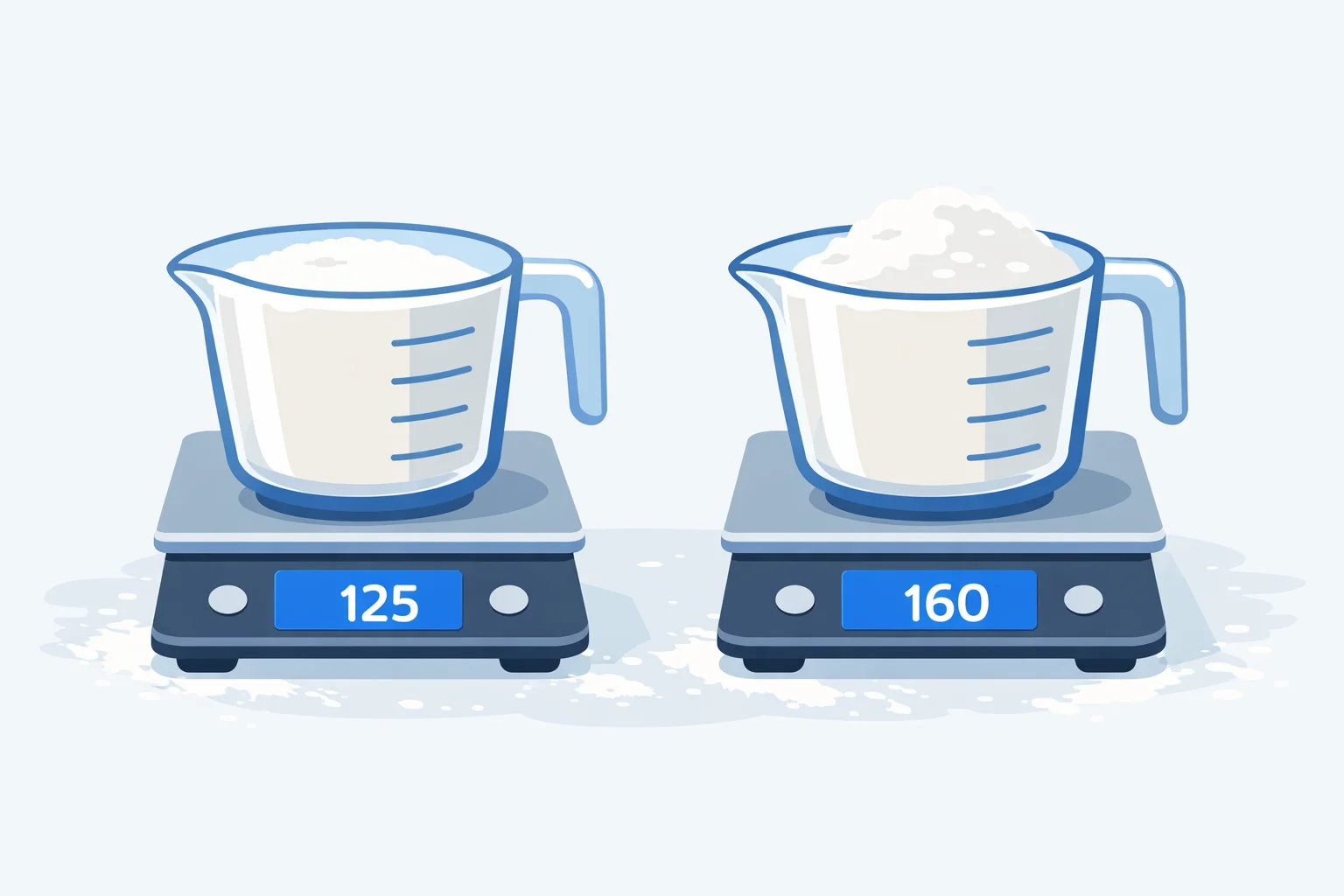
The 35-Gram Mistake Hiding in Your Cup
Most flour disasters aren't bad recipes — they're measuring errors. A cup is a unit of volume (236.588 mL), and flour is compressible, so the weight you get depends entirely on how much you pack into that space. Spoon it in gently and the flour stays fluffy at 125g. Plunge the cup into the bag and the walls force the grains together, squeezing in 25 to 30 percent more.
Run the numbers and it's alarming. A loaf recipe with 4 cups of flour should use 500g. Scoop instead of spoon and you're suddenly at 640g — an extra 140g, roughly an entire extra cup you never meant to add. The dough turns stiff, the crumb tightens, and you blame the yeast. Switching to grams kills the problem outright, because a scale doesn't care how you got the flour into the bowl.
Gram Weights by Flour Type
Not all flour weighs the same per cup. Protein content and milling fineness change how the grains pack. Bread flour's extra protein makes it denser; rye and spelt are unusually light; semolina is the heavyweight of the pantry. Here are the spoon-and-level weights for the flours people convert most:
| Flour | 1 cup (g) | ½ cup (g) |
|---|---|---|
| All-purpose | 125 | 62 |
| Bread | 130 | 65 |
| Cake | 115 | 57 |
| Whole wheat | 120 | 60 |
| Rye | 102 | 51 |
| Semolina | 167 | 84 |
| Almond | 96 | 48 |
| Coconut | 112 | 56 |
| Gluten-free AP blend | 140 | 70 |
Almond and coconut flour deserve a warning. Almond flour clumps, so people press it down and overshoot 96g badly; coconut flour is so absorbent that 10g too much can leave a batter gluey. For nut-based baking, weighing isn't optional. If you bake gluten-free often, our full cups-to-grams ingredient chart covers starches and binders alongside flours.
Spoon, Scoop, or Sift: What Each Does
The three methods aren't just style preferences — each lands on a different weight for the identical cup. This is the comparison no flour bag prints:
| Method | 1 cup AP flour | vs standard | When it's used |
|---|---|---|---|
| Spooned & leveled | 125g | baseline | What nearly every recipe assumes |
| Scooped (dip & sweep) | ~160g | +28% | The fast, accidental way most home cooks do it |
| Sifted into the cup | ~110g | −12% | Cake and pastry recipes that call for sifted flour |
Word order in a recipe matters here. "1 cup sifted flour" means sift first, then measure — that's the 110g number. "1 cup flour, sifted" means measure the 125g first, then sift for aeration. Confuse the two and a delicate sponge cake gets 15g too much flour, enough to flatten the rise.
Worked Example: Converting a Cookie Recipe
Say a recipe calls for 2¼ cups all-purpose flour — the classic chocolate chip cookie amount. You measure by spooning, so:
- Grams = cups × grams-per-cup
- Grams = 2.25 × 125 = 281g
Now imagine your sister made the same recipe by scooping. Her 2¼ cups came to 2.25 × 160 = 360g — a full 79g more flour. Same recipe card, same cup, yet her cookies spread less and bake up cakey while yours stay chewy. That single variable explains why "I followed it exactly" cookies still come out different in two kitchens. To scale the whole recipe at once, the recipe scaler converts every ingredient to grams together, and the cups to grams butter converter handles the stick-to-gram math for the rest of the dough.
Why Some Charts Say 120g and Others 125g
You'll see two different "official" weights for a cup of all-purpose flour, and both are correct. King Arthur Baking standardizes on 120g per cup, while the USDA and most US conversion charts use 125g. The 5-gram difference comes down to how aggressively each one assumes you spoon. It rarely matters for a single cup, but in a recipe with 5 cups of flour it's a 25g swing. The fix is simple: if your recipe came from a King Arthur source, weigh to their 120g; otherwise 125g is the safer default. The King Arthur ingredient weight chart lists their exact figures for every flour they sell.
How Humidity Quietly Adds Grams
Flour is hygroscopic — it pulls moisture from the air. On a humid summer day, an open bag can gain 1 to 2 percent of its weight in absorbed water, so a "125g" cup might genuinely weigh 127g, of which 2g is moisture rather than flour. That's usually trivial, but it's why professional bakeries store flour in climate-controlled rooms and why your hydration can feel off when baking bread in a damp climate. If a dough seems stubbornly wet, the flour may be holding water before you ever added any.
When Cups Are Fine and When They Aren't
Weighing flour isn't always worth the scale. For dredging chicken, thickening a gravy with a tablespoon or two, or dusting a work surface, a cup or a handful is completely fine — a 20g error vanishes into the dish. The accuracy gap only bites when flour is the structural backbone of the recipe.
So weigh your bread, cakes, cookies, and pastry, where a 30g flour swing changes texture you can taste. Eyeball everything else. The smartest move is to keep this converter open while you bake from a cup-based recipe: pick your flour, match your real measuring habit, and you'll know the gram weight your dough actually has — not the one the recipe hoped for.