Cocoa Powder Cups to Grams: Same Weight, Different Chemistry
A cups to grams cocoa powder conversion is refreshingly stable: one cup of unsweetened cocoa weighs about 85 grams whether it's natural or Dutch-process. That makes cocoa easier than flour, where a cup swings from 120g to 150g depending on how you scoop. But there's a twist most converters miss. The grams are the easy part — which cocoa you reach for changes the chemistry of the whole recipe, and grab the wrong one and your cake sinks or tastes faintly of soap.
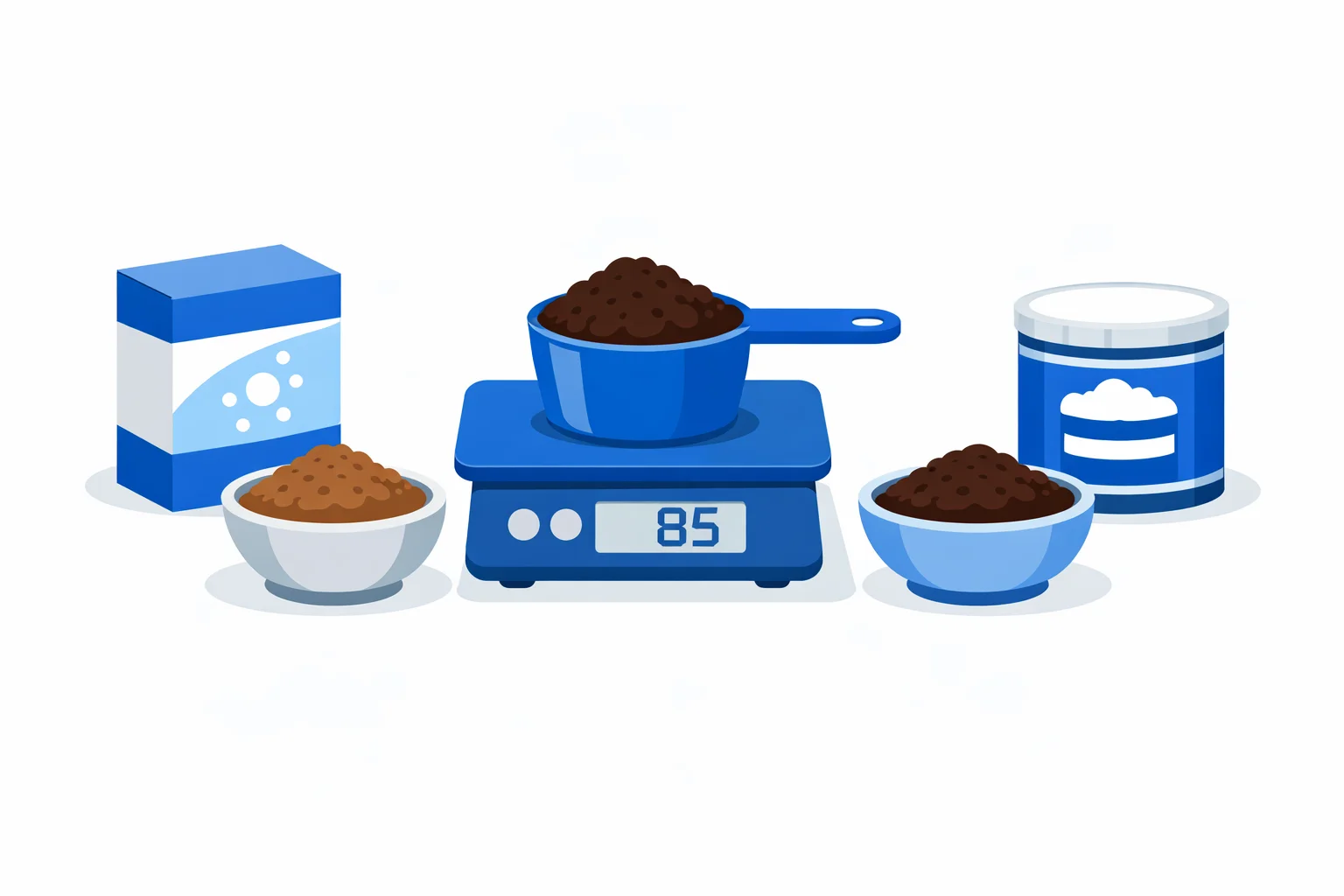
The Weight Barely Moves — The Chemistry Does
Here's what makes cocoa unusual among baking ingredients. Take natural cocoa, treat it with an alkali until it's Dutch-process, and the powder turns darker, mellower, and shifts from acidic (pH ~5.3) to roughly neutral (pH ~7.6). Yet a level cup still weighs 85g either way. The alkalizing changes flavor and color, not packing density.
So unlike brown sugar or oats, where the variable is weight, cocoa's variable is acidity. And acidity drives leavening. Natural cocoa is acidic enough to fizz with baking soda; Dutch cocoa isn't, so it leans on baking powder, which carries its own acid. Mix those up and the gram weight on your scale is correct while the cake is still ruined. That's why the tool above pairs each cocoa with its leavener.
Gram Weights for Every Cocoa Type
These are spooned-and-leveled weights for a level US cup (236 mL), drawn from USDA FoodData Central and the King Arthur Baking weight chart:
| Cocoa type | 1 cup | pH | Leavener |
|---|---|---|---|
| Black cocoa | 80g | 8.0 | Baking powder |
| Natural unsweetened | 85g | 5.3 | Baking soda |
| Dutch-process | 85g | 7.6 | Baking powder |
| Raw cacao powder | 90g | 5.6 | Baking soda |
| Sweetened cocoa mix | 125g | 6.8 | None (drink mix) |
Notice how tight the baking cocoas are — 80g to 90g across four very different powders. The lone outlier is sweetened drink mix at 125g, because it's mostly sugar. If you're weighing several baking staples in one go, our full cups-to-grams ingredient chart lists cocoa beside flour, sugar and butter.
Natural vs Dutch-Process: The pH That Rewrites a Recipe
Dutching is a 19th-century trick. In the 1820s the Dutch chemist Coenraad van Houten treated cocoa with alkaline salts to cut bitterness and help it blend into liquid — the process still carries his country's name. The alkali pushes cocoa's pH up from about 5.3 toward 7 or 8, and that single change is what reroutes the leavening.
Think of it as a simple acid-base pairing. Baking soda is purely alkaline and needs an acid partner to release gas — natural cocoa supplies that acid. Baking powder already contains both a base and an acid, so it works with neutral Dutch cocoa that brings no acid of its own. Use baking soda with Dutch cocoa and there's nothing to neutralize the soda, leaving that telltale metallic, soapy aftertaste and a weak rise. Reach for our grams to tablespoons converter when a recipe gives the leavener in grams and you need spoon measures.
Sifted, Spooned, or Scooped: A 25-Gram Spread
Cocoa clumps worse than almost any pantry powder. Cocoa butter and moisture make it cake into lumps, so how you fill the cup matters. Sift it first and the aerated powder drops to about 75g per cup. Spoon it in gently and level off — the recipe standard — and you land at 85g. Dip the cup straight into the tin and the powder compresses to nearly 100g.
That's a 25-gram spread, or about 30%, on a single cup of the same cocoa. In a fudgy brownie that extra cocoa reads as dry and chalky; sift-light and the chocolate tastes thin. The fix is dull but reliable: pick one method and stick to it. The tool's method selector recalculates the whole table so your numbers match how you actually scoop.
Worked Example: Weighing Out a Brownie Batch
Say a brownie recipe calls for ¾ cup of natural cocoa and you want to weigh it for consistency:
- Natural cocoa is 85g per spooned cup.
- ¾ × 85 = 64g of cocoa.
- That's about 12 level tablespoons (64 ÷ 5.3), handy if the measuring cup's gone missing.
Now suppose all you have is Dutch-process. The weight doesn't change — still 64g, since both cocoas are 85g per cup. What changes is the leavener: a recipe built around natural cocoa and baking soda will taste flat with Dutch cocoa unless you switch part of that soda to baking powder. To scale the whole batch for a bigger pan afterward, the recipe scaler adjusts every ingredient's grams together.
Swapping Cocoa Types Without Killing the Rise
Because the weights match, substituting one cocoa for another is really about rebalancing acid. A few rules that hold up in practice:
- Natural → Dutch:you're removing acid. Replace some baking soda with baking powder — a common ratio swaps each ⅛ tsp soda for about ½ tsp powder.
- Dutch → natural:you're adding acid. The extra tang usually needs a touch of baking soda to tame it and lift the crumb.
- Recipes with buttermilk, sour cream, or brown sugar already carry acid, so the swap is far more forgiving — the batter is buffered either way.
When a recipe doesn't specify, color is a clue: natural cocoa is lighter and reddish-brown; Dutch is darker, almost black-brown. If a recipe wants a deep, Oreo-dark crumb, it was written for Dutch or black cocoa, and the leavener was chosen to match.
Cocoa by the Tablespoon
For drinks and dustings you rarely need a full cup. One level tablespoon of cocoa is about 5.3g, since a cup holds 16 tablespoons. So a mug of homemade hot chocolate at 2 tablespoons is roughly 11g of cocoa, and a recipe's "3 tablespoons cocoa" comes to about 16g. Those small amounts are exactly where a scale earns its keep — eyeballing a tablespoon of clumpy cocoa is how you drift 30% over or under.
When a Cup Is Fine and When to Weigh
For a mug of cocoa or a dusting over a finished cake, a cup or spoon is fine — nobody's counting grams. Weighing earns its place in three spots: brownies and dense bakes, where 64g versus 85g of cocoa is the line between fudgy and dry; any recipe where you're swapping cocoa types and need the grams locked; and macro tracking, where the 85g-not-100g gap quietly compounds.
The habit worth keeping is mental: cocoa's weight is dependable, but its chemistry isn't interchangeable. Match the gram amount with your scale, then match the leavener to the cocoa. Get both right and your chocolate bakes climb and taste the way the recipe intended — not flat and faintly soapy.