Ounces to Cups: The Fluid-vs-Dry Trap That Ruins Recipes
Converting ounces to cups looks like a one-line answer — 8 ounces makes a cup, done. It is, right up until the ounces on your scale and the ounces on your measuring jug stop agreeing. Pour 8 fluid ounces of water into a cup and it fills to the brim. Weigh out 8 ounces of flour and you'll need almost two cups to hold it. Same number, same word, wildly different volume. That gap is where recipes quietly go wrong, and the converter above settles it by asking one question first: fluid ounces or weight ounces?
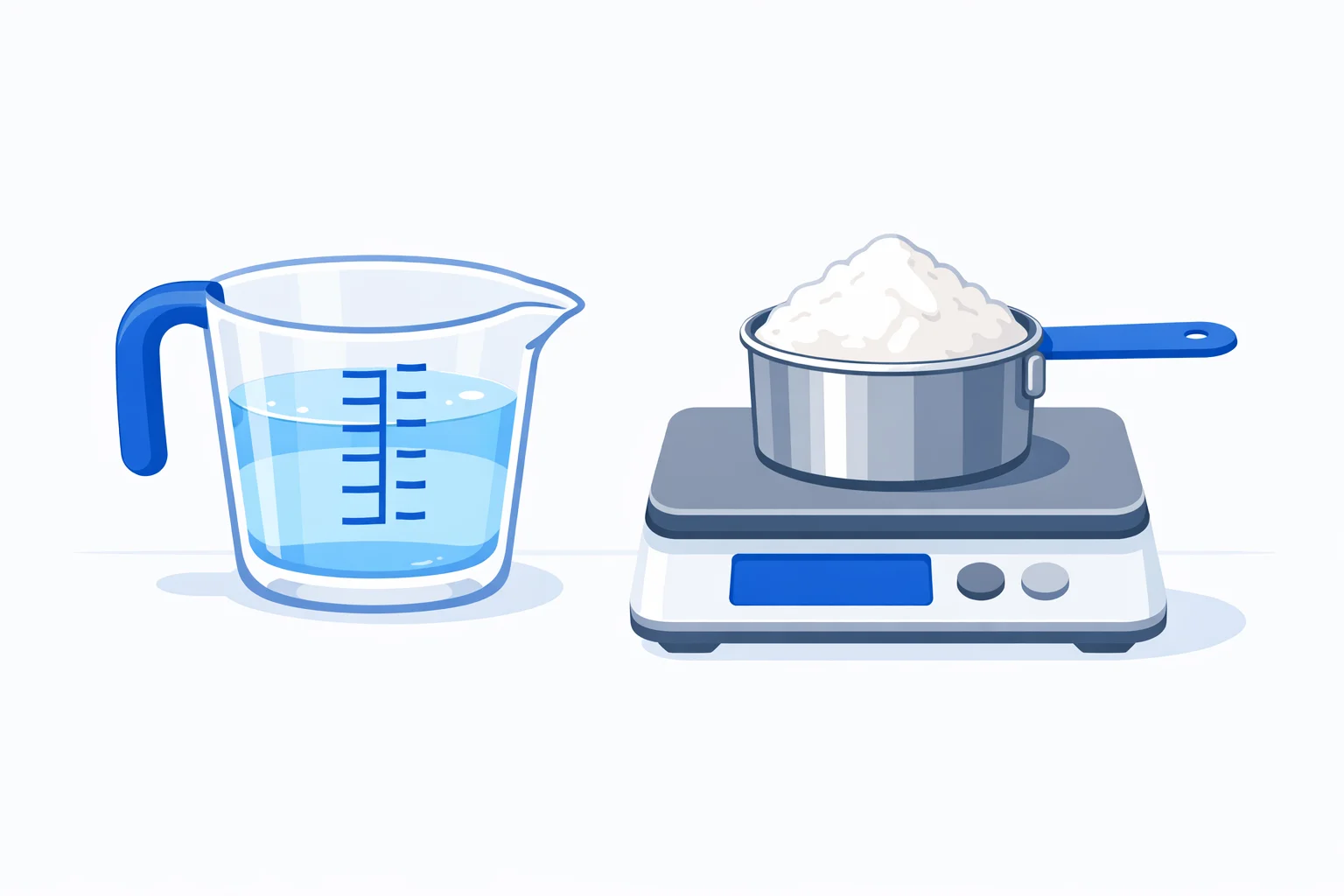
The Two Ounces Hiding in One Word
English uses "ounce" for two completely different things. A fluid ounce is a measure of volume — 29.57 mL, the space a liquid takes up. A dry ounce (properly an avoirdupois ounce) is a measure of weight — 28.35 grams, what a scale reads. They share a name and a rough size, which is the whole problem. A cup is always a volume, so converting to cups from a fluid ounce is pure geometry, while converting from a weight ounce drags density into the math.
The two only line up for one substance: water. One fluid ounce of water weighs almost exactly one ounce, because water's density is the reference everything else is judged against. Flour floats well below that line; honey sits well above it. That single fact explains every "but my recipe said 8 ounces" headache in the kitchen.
The Fluid Ounce Side: 8 Equals 1, No Exceptions
For liquids, the conversion is fixed and friendly. One US cup is defined as exactly 8 US fluid ounces, which is 236.588 mL. So cups = fluid ounces ÷ 8, every time, for water, milk, stock, oil or wine. Four fluid ounces is half a cup. Two fluid ounces is a quarter cup. Sixteen fluid ounces is a pint — two cups on the nose.
The only wrinkle is which cup you mean. The US customary cup is 236.6 mL, but the US "legal" cup used on nutrition labels is rounded to 240 mL, and the metric cup common in the UK, Australia and New Zealand is 250 mL. Pour 8 fluid ounces (236.6 mL) into a 250 mL metric cup and you fill it only 95% of the way. For most cooking that 3–6% gap never matters, but it's why a converted volume can look slightly off. If you work in milliliters more than ounces, our cups to milliliters converter lets you pick the exact cup standard.
The Weight Ounce Side: Density Changes Everything
Here's where the eight-equals-one rule collapses. A weight ounce is a fixed mass, so how many cups it fills depends entirely on how heavy the ingredient is per cup. Run the numbers and the spread is enormous:
- All-purpose flour weighs about 4.2 oz per cup. So 8 oz of flour fills roughly 1.9 cups — nearly double what people expect.
- Granulated sugar weighs about 7.1 oz per cup. 8 oz of sugar is 1.1 cups — close to one cup, but not quite.
- Butter weighs about 8.0 oz per cup. 8 oz of butter is 1.0 cup exactly — one of the rare ingredients where the rule holds.
- Honey weighs about 12.0 oz per cup. 8 oz of honey is only 0.67 cups — two-thirds of a cup.
Same 8 ounces of weight, anywhere from 0.67 to 1.9 cups depending on what's in the bowl. The formula is cups = weight in ounces ÷ (ounces per cup for that ingredient). When precision matters, skipping cups and weighing in grams sidesteps the whole mess — our cups to grams chart lists the per-cup weight for dozens of ingredients.
Worked Example: An 8 oz Bag of Flour
You buy a bag of flour labeled "Net Wt 8 oz" and a recipe wants you to measure it in cups. That 8 oz is a weight — bags are sold by mass, not volume. Walk it through:
- All-purpose flour weighs about 120 grams per cup, which is 120 ÷ 28.35 = 4.23 oz per cup.
- Cups in the bag = 8 oz ÷ 4.23 oz per cup = 1.89 cups.
- If you'd assumed "8 oz = 1 cup" you'd have used just over half the flour the bag actually holds.
Now flip it. A cookie recipe calls for 1 cup of flour and you want the weight for a scale: 1 cup × 4.23 oz = 4.23 oz, or 120 grams. That's why bakers who weigh get consistent results while cup-scoopers don't — a "cup" of flour can range from 4 to 5.5 oz depending on whether it was scooped, spooned or packed. Weight removes that variable entirely.
Ounces-per-Cup by Ingredient
This table is the reverse lookup you'll reach for most: how much one cup of each common ingredient weighs in ounces, and what 8 oz of it works out to in cups. Values follow King Arthur Baking and USDA FoodData Central reference weights.
| Ingredient | Weight of 1 cup (oz) | 8 oz weight = ? cups |
|---|---|---|
| Water | 8.35 oz | 0.96 cups |
| All-purpose flour | 4.23 oz | 1.89 cups |
| Granulated sugar | 7.05 oz | 1.13 cups |
| Brown sugar (packed) | 7.51 oz | 1.07 cups |
| Powdered sugar | 3.99 oz | 2.01 cups |
| Butter | 8.01 oz | 1.00 cup |
| Honey | 11.99 oz | 0.67 cups |
| Rolled oats | 3.14 oz | 2.55 cups |
| Cocoa powder | 2.96 oz | 2.70 cups |
Notice the pattern: light, fluffy powders (flour, powdered sugar, oats, cocoa) give you morethan two cups for 8 oz, while dense ingredients (honey, syrup, packed brown sugar) give you less than one. Butter sitting at almost exactly 8 oz per cup is the happy coincidence that keeps the "8 oz = 1 cup" myth alive.
Reading Ounces Off a Food Label
Packaged food is where this trips people up most. A label's "net weight" is always a weight, never a volume, no matter how liquid the contents look. A 15 oz can of pumpkin purée isn't 15 fluid ounces — purée is denser than water, so it's closer to 1.75 cups, not the 1.875 cups you'd guess from volume. A 16 oz box of pasta, a 14 oz can of condensed milk, a 10 oz bag of chocolate chips — each needs its own density to land on a cup count.
The rule of thumb: if it came off a scale or a package, treat it as weight and divide by the ingredient's ounces-per-cup. If it came off a measuring jug with a liquid in it, treat it as volume and divide by 8. When you're juggling several units at once, the all-in-one cooking converter handles cups, ounces, grams and spoons together.
Where Cooks Get Burned
Almost every ounces-to-cups error traces back to confusing the two ounce types. The three that do the most damage:
- Measuring dry weight as if it were fluid volume.Using 8 oz of flour as "1 cup" leaves you 0.9 cups short — your dough is dry and crumbly because you've nearly halved the flour.
- Trusting a liquid measuring cup for solids. The 8 oz line on a glass jug marks 8 fluid ounces of volume. Fill it with sugar to that line and you have a cup of volume, not 8 ounces of weight — those are two different amounts.
- Forgetting that "a cup" of flour isn't one fixed weight. Scooped straight from the bag, a cup of flour can hit 5.5 oz; spooned and leveled, about 4.2 oz. That 30% swing is why serious bakers weigh in grams instead of trusting cups.