Cups to Milliliters: Which Cup Are You Actually Measuring With?
Converting cups to milliliters looks like it should give one fixed answer, but it doesn't. A US cup is 236.588 mL, the cup on American nutrition labels is 240 mL, an Australian metric cup is 250 mL, and an old British imperial cup is a hefty 284.131 mL. Unlike weight conversions, this has nothing to do with the ingredient — a cup is pure volume, so a cup of water and a cup of oil are the same millilitres. The only thing that moves the number is which country's cup you're holding. The converter above lets you pick that standard so the mL lines up with the recipe.
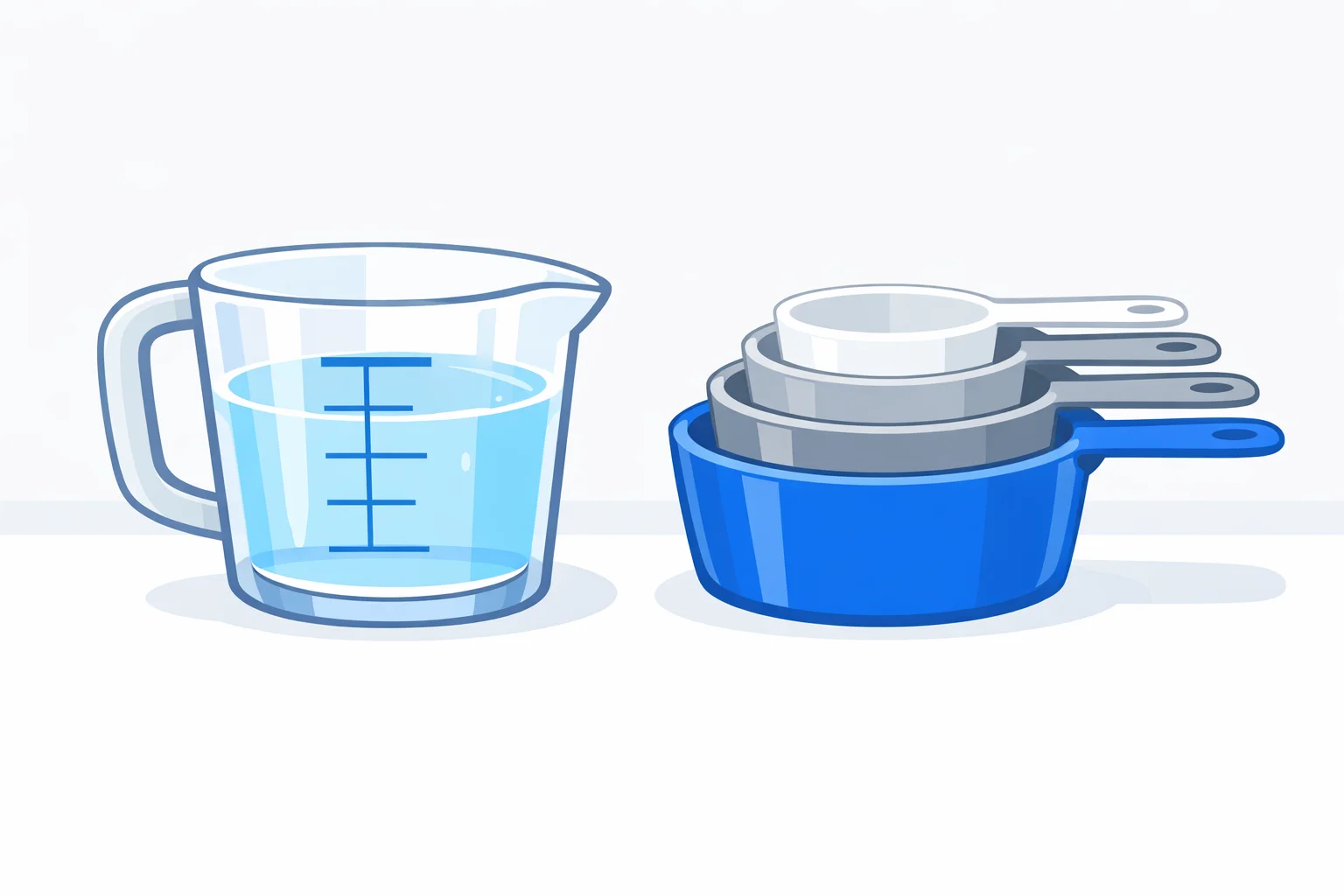
Why a Cup Isn't One Fixed Volume
The cup was never standardized internationally the way the meter or the liter was. Each country settled on its own version, and those versions never converged. The full spread runs from the Japanese 200 mL cup up to the British imperial 284.131 mL cup — a 42% difference between the smallest and largest "cup" in common use. Drop the same recipe into two kitchens on opposite sides of that range and you're pouring noticeably different amounts of liquid.
That's why a millilitre is the safer unit to think in. The mL is defined by the International System of Units and means exactly the same thing everywhere on Earth. When a recipe lists volumes in mL, there's no ambiguity. When it lists cups, your first question should be: whose cup?
The US Cup: 236.588 mL (and Why 240 Keeps Appearing)
The US customary cup is defined as 8 US fluid ounces, and since one US fluid ounce is 29.5735 mL, the cup works out to 236.588 mL. That's the number behind almost every American recipe, and it's the default in the tool above. Multiply by the cup count and you have your answer: 1 cup is 236.6 mL, 2 cups is 473.2 mL, ½ cup is 118.3 mL.
So where does 240 mL come from? That's the "legal" cup the US Food and Drug Administration uses for nutrition labeling, rounded up for easier label math — you'll see it defined in FDA regulation 21 CFR 101.9. The 3.4 mL gap between 236.588 and 240 is meaningless for a single serving of cereal, so for cooking you can treat 1 US cup as 237 mL or 240 mL interchangeably without anyone noticing.
Metric, Imperial, and Japanese Cups
Outside the US, the cup splinters further. Australia, New Zealand, and modern Canada use a tidy metric cup of exactly 250 mL — chosen specifically because it's a round number. The old British imperial cup is 284.131 mL, equal to 10 imperial fluid ounces or half an imperial pint, though most modern UK recipes have abandoned cups in favor of grams and mL. Japan uses a 200 mL kitchen cup, and there's a famous twist below it: the plastic cup that comes with a rice cooker holds only 180 mL, matching the traditional Japanese gō rice measure (180.39 mL).
| Cup standard | 1 cup (mL) | Used in |
|---|---|---|
| Japanese kitchen cup | 200 | Japan (general cooking) |
| US customary | 236.588 | United States (recipes) |
| US legal (labels) | 240 | US nutrition facts panels |
| Metric | 250 | Australia, NZ, modern Canada |
| Imperial (old UK) | 284.131 | Pre-metric British recipes |
If you want a weight rather than a volume — say, to bake by the gram instead of the cup — the conversion does start to depend on the ingredient. That's a different calculation; our cups-to-grams ingredient chart handles the density side for flour, sugar, butter, and dozens more.
Worked Example: A Metric Recipe in a US Kitchen
Picture an Australian sponge cake recipe that calls for 3 cups of milk. You're in the US with a standard set of measuring cups. Here's what actually happens:
- The recipe means metric cups: 3 × 250 = 750 mL of milk.
- Your US cups deliver: 3 × 236.588 = 709.8 mL.
- Shortfall: 40.2 mL — roughly 2¾ US tablespoons of missing liquid.
Forty millilitres short across three cups is enough to leave a batter visibly thicker and a sponge slightly drier than intended. The fix is one click: set the converter to the metric cup, read 750 mL, and measure that with a graduated jug instead of cup-scooping. Going the other way, an American recipe measured with Aussie cups would over-pour by the same 40 mL.
Liquid Cups vs Dry Cups: Same Volume, Different Tools
A myth worth killing: liquid measuring cups and dry measuring cups do not hold different amounts. In the US, both are 236.588 mL per cup. The difference is the shape, not the capacity. Liquid cups (the clear spouted jugs) have headroom above the top line so you can carry water without sloshing, and you read them at eye level. Dry cups are sized to be filled to the brim and scraped flush with a knife.
Why two tools, then? Accuracy of technique. Try to measure 1 cup of flour in a spouted liquid cup and you can't level it cleanly, so you over- or under-pack by 10–20 grams. Try to measure 1 cup of milk in a dry cup and you have to fill it to the very rim, which spills. Same 236.588 mL target — different tool to hit it reliably. For the flour side specifically, where packing swings the weight hard, our cups to grams flour converter shows exactly how much a scooped versus spooned cup differs.
Quick Cups-to-mL Reference Table
These are the US customary values (236.588 mL per cup) — the ones most readers need. The collapsible table inside the tool above does the same for metric, imperial, and Japanese cups.
| Cups | Milliliters (US) | US fl oz |
|---|---|---|
| ¼ cup | 59.1 mL | 2 |
| ⅓ cup | 78.9 mL | 2.67 |
| ½ cup | 118.3 mL | 4 |
| ⅔ cup | 157.7 mL | 5.33 |
| ¾ cup | 177.4 mL | 6 |
| 1 cup | 236.6 mL | 8 |
| 1½ cups | 354.9 mL | 12 |
| 2 cups | 473.2 mL | 16 |
Two handy anchors to memorize: a cup is 8 fluid ounces, and 2 cups is 473 mL — close to, but not exactly, half a liter. To hit a clean 500 mL you actually need 2.11 cups. For the broader set of kitchen swaps, the all-in-one cooking converter moves between cups, mL, grams, and spoons at once.
The Cup Mix-Ups That Wreck a Recipe
Most cups-to-mL errors aren't arithmetic — they're using the wrong cup definition. The three that bite hardest:
- Assuming every cup is 250 mL.People see "metric" and reach for 250. But a US cup is 236.588 mL. Convert four US cups as if they were metric and you've added 54 mL of phantom liquid.
- Mixing imperial and US fluid ounces.A US cup is 8 US fl oz (29.5735 mL each); an imperial cup is 10 imperial fl oz (28.4131 mL each). The ounces themselves are different sizes, so "8 ounces" isn't a fixed millilitre amount across systems.
- Measuring rice with the wrong cup.Use a 240 mL US cup where a recipe assumes the 180 mL rice-cooker cup and you've loaded 33% more rice — then the printed water line on the pot gives you undercooked, hard grains.
When the Cup Standard Actually Matters
Be honest about the stakes. For a pot of soup, a stew, or a smoothie, the 13 mL gap between a US and a metric cup disappears into the recipe — eyeball it and move on. Cooking is forgiving; small volume errors wash out. You don't need to fuss over which cup you're using for anything braised, simmered, or blended.
Baking is where it bites. Cakes, breads, custards, and anything leavened depends on a tight liquid-to-flour ratio, and there a 40 mL swing across a few cups changes the crumb. The other flashpoint is recipes that cross borders — an Australian blog, a British cookbook from the 1970s, a Japanese rice dish. When the source country's cup differs from yours, set the standard in the converter, read the mL, and measure with a graduated jug. That single habit removes the biggest hidden variable in cup-based cooking.